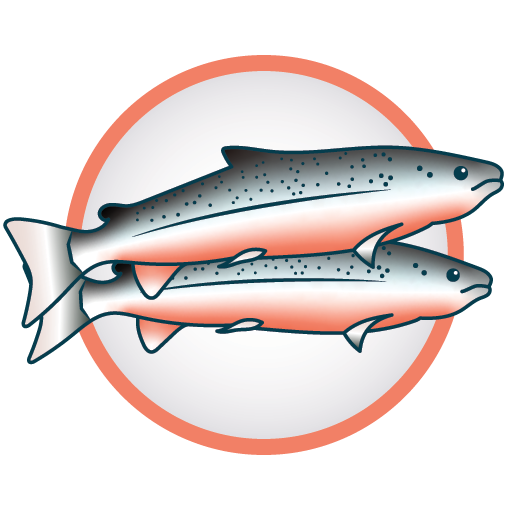
A great male salmon in a spawning suit. Photo: Helge Skoglund.
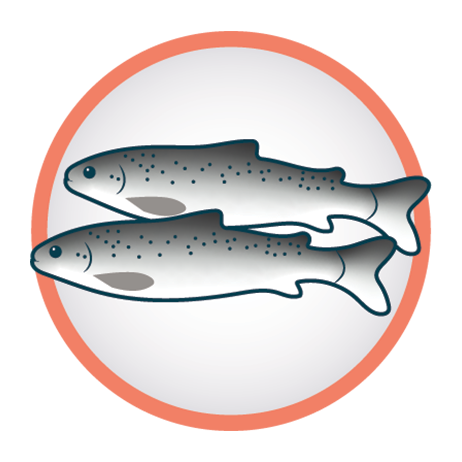
When the salmon comes swimming in from the ocean and up into the river, it is silver-shiny. After it has been in the river for a while, its appearance gradually begins to change. The silver sheen eventually disappears, the skin darkens, and we can sense an incipient hook on the lower jaw of the male salmon. The male salmon develop sperm, and the female salmon roe. That means the salmon are getting ready to spawn.
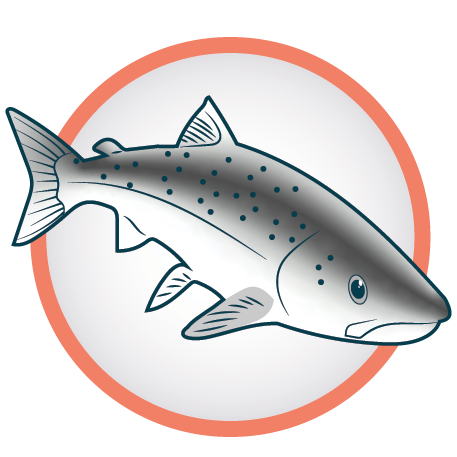
In late autumn, before the ice settles, the salmon spawn in many rivers. Then the spawning salmon have decked themselves out properly. The spawning dress of the male salmon is especially colorful and magnificent. The male derives color and energy from the fish meat. The skin becomes reddish, and the lower jaw acquires a real hook. The hook is well suited for fighting with, and both the color and the hook should impress the female salmon.
The female does not become as colorful in the skin as the male salmon. She becomes more brownish. But the eggs acquire a bright orange color.
The skin of the spawning salmon becomes thicker, and the fish scales sit firmer. It is advisable to be hard-skinned when fighting and maybe stay in the river for a whole winter.
The spawning salmon spends plenty of time getting ready. Having remained relatively calm in the same place, perhaps for several weeks, it begins to look for the perfect spawning ground. It's a battle for the best spots. The strongest male is the boss.
The roe is laid in a spawning pit, which the female salmon digs. She uses her tail to dig and her anal fin to measure the proper depth. The toughest male salmon is immediately in place and fertilizes the roe when the female releases the eggs. The female salmon quickly covers the roe with a layer of gravel.
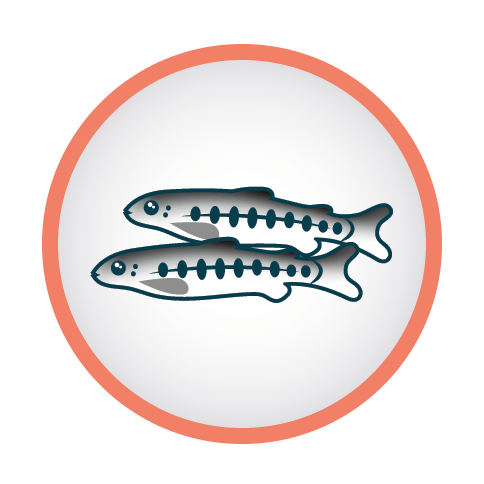
In the spawning grounds there are always some small tricksters that we call spawning parr or sneak spawners. These little ones are sexually mature salmon males that have not been on a feeding migration in the ocean. They sneak in and help fertilize the roe. They live dangerously and can be killed if they get in their way and are spotted.

Some male parrs become sexually mature and participate during spawning. We call them spawning parrs or sneak spawners. Those of them that survive the spawning may later travel to the ocean and return as spawning salmon. In the photo on the left you see a parr. If it is a male fish, it will either smoltify and travel to the sea or stay in the river and try its luck as a sneak spawner. It can also be a clever strategy. Spawning parr do not get as nice spawning attire as the large spawning salmon.
Kvåsveien 1500
4588 Kvås - Lyngdal
Org No. 915 380 972
The wild salmon is a part of our history and culture.